
The Coach’s Oxygen Mask: Self-Care, Post Traumatic Growth, and the Responsibility of Presence
Apr 06, 2026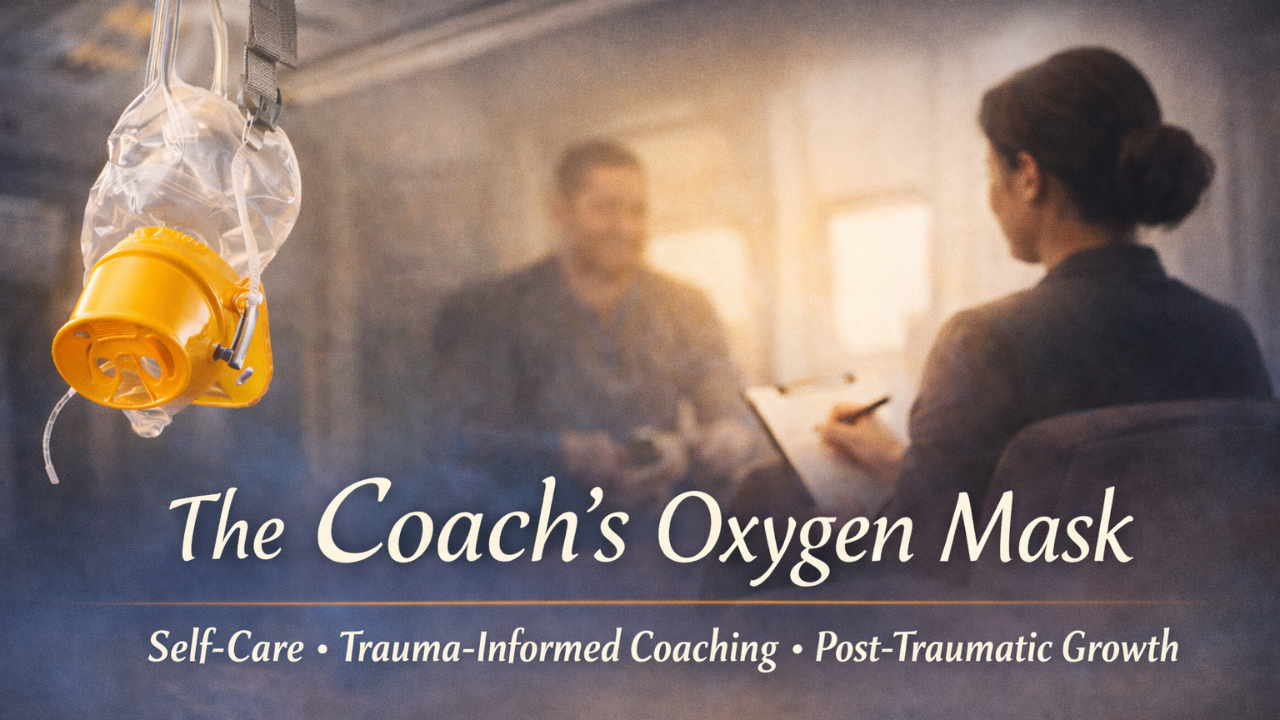
Health and wellness coaches spend much of their professional lives supporting others through change. Clients arrive with goals, but they can also bring stress, loss, illness, moral injury, and the accumulated weight of difficult experiences. For health and wellness coaches trained in trauma informed approaches, the work often involves helping individuals move from a state of post-traumatic stress toward post traumatic growth. That journey requires skill, patience, and presence. It also requires something that is often overlooked in “helping” professions: the coach’s own well-being.
The familiar instruction on airplanes to “put on your own oxygen mask before assisting others” is more than a metaphor. It is a practical reminder that sustainable care for others begins with caring for oneself. Coaches who ignore their own needs risk fatigue, emotional depletion, and diminished presence. Over time, this can erode the very qualities that make coaching effective, including curiosity, compassion, and the ability to hold space for another person’s story.
A Refresher on Post Traumatic Growth
The concept of post traumatic growth emerged from the work of psychologists Richard Tedeschi and Lawrence Calhoun, who observed that many people report positive psychological change after navigating profound adversity. This growth does not minimize the pain of trauma. Instead, it reflects the ways individuals can reconstruct meaning, identity, and priorities after hardship.
Research on post traumatic growth identifies several domains where change often occurs:
• A deeper appreciation for life
• Strengthened relationships and connection with others
• Recognition of personal strength
• Openness to new possibilities and life directions
• Spiritual or existential development
In coaching, the goal is not to force growth or to bypass grief, loss, or stress. Health and wellness coaches understand that healing and growth unfolds at different speeds for different people. What coaches can do is create conditions that support reflection, agency, and resilience. Through powerful questions, active listening, and an environment of psychological safety, coaches help clients recognize their own capacity for forward movement and growth. Because guiding others through this requires emotional stamina and grounded presence, self-care becomes a personal responsibility instead of a luxury.
Self-care as a Professional Competency
Both the International Coaching Federation (ICF) and the National Board for Health and Wellness Coaching (NBHWC) emphasize the importance of coach presence, ethical practice, and professional boundaries. While these competencies are often discussed in terms of skills, they are deeply connected to the coach’s personal well-being. A coach who is exhausted, chronically stressed, or disconnected from their own health practices may struggle to remain fully present. Emotional fatigue can narrow listening, reduce curiosity, and make it difficult to hold space without judgment or urgency. Self-care strengthens the very competencies that coaching relies upon:
• Presence becomes easier when the nervous system is regulated.
• Deep listening improves when mental bandwidth is not consumed by stress.
• Curiosity and empathy expand when the coach is grounded and restored.
• Ethical boundaries are clearer when the coach is clear minded and focused.
In this sense, self-care is not separate from professional development. It is part of it.
Looking Across the Dimensions of Wellness
Health and wellness coaches often speak about whole person health, but the same framework that guides our work with clients should also guide how we care for ourselves. Many organizations and educational institutions describe eight dimensions of wellness that influence overall well-being, and increasingly, some organizations are also recognizing a ninth dimension, cultural wellness, which acknowledges the role that identity and community play in health.
For coaches, paying attention to these dimensions is a practical way to ensure that the work remains sustainable for our clients and ourselves.
Physical wellness forms the foundation. Adequate sleep, nourishing food, movement, and recovery are not optional habits for coaches who want to sustain their energy and cognitive clarity. When the body is depleted, presence and attentiveness quickly follow.
Emotional wellness involves the ability to recognize and process one's own internal experiences. Coaches who regularly reflect, seek supervision, or practice mindfulness are better equipped to remain grounded while holding space for clients’ stories.
Social wellness reminds us that coaches also need connection. Supportive relationships with friends, family members, colleagues, and professional communities provide perspective and emotional nourishment that make the work of supporting others possible.
Intellectual wellness is strengthened through curiosity and continued learning. Staying engaged with research, behavioral science, and evolving coaching methodologies keeps the work intellectually stimulating and professionally rewarding.
Spiritual wellness often relates to meaning and purpose. Many coaches are drawn to the profession because they want to contribute to the growth and well-being of others. Staying connected to that sense of purpose can be a powerful source of resilience.
Occupational wellness speaks to the sustainability of one’s professional life. Healthy boundaries around scheduling, client load, and emotional labor help prevent fatigue and allow coaches to remain fully present with the clients they serve.
Environmental wellness acknowledges the influence of the spaces where we live and work. Access to supportive environments, natural spaces, and work settings that foster focus can significantly affect well-being.
Financial wellness, while sometimes overlooked in discussions of health, plays an important role in reducing stress and supporting overall stability.
Increasingly, some organizations also recognize cultural wellness as an additional dimension. Cultural identity, traditions, and community connections shape how individuals experience belonging, resilience, and health.
When coaches attend to these dimensions in their own lives, they strengthen their capacity to remain present, grounded, and effective in their work.
The Influence of Social Determinants of Health
Another lens that experienced health and wellness coaches should consider is the role of the social determinants of health. These include the conditions in which people are born, live, work, and age. Access to safe housing, education, income, transportation, food, and healthcare all influence health outcomes. Coaches often explore these realities with clients, recognizing that behavior change does not occur in a vacuum.
A coach’s own environment can also either support or undermine well-being. Long work hours, financial stress, caregiving responsibilities, or limited access to supportive resources can influence a coach’s health just as they do for clients. A trauma informed perspective recognizes that context matters. Having a sustainable coaching career requires attention to all of life’s circumstances that impact our ability to succeed in a healthy way.
Modeling the Growth, We Support
Perhaps the most powerful form of teaching in coaching is modeling. When coaches actively engage in their own self-care practices, they demonstrate what it looks like to live in alignment with health and growth. They show that resilience is not the absence of stress, but the presence of supportive habits, relationships, and reflection. They demonstrate that growth is possible not only after trauma, but throughout the everyday challenges of life, and they reinforce that helping others thrive begins with ensuring that we are tending to our own oxygen mask first. For health and wellness coaches, self-care is not separate from the work. It is what makes the work sustainable, ethical, and transformative for everyone involved.
Reflection for Coaches
As you support others in navigating stress, change, and growth, what practices help you sustain your own well-being, and where might strengthening your self-care positively impact your coaching relationships?