
The Health Impact of Disconnection and the Importance of Community
Jun 24, 2026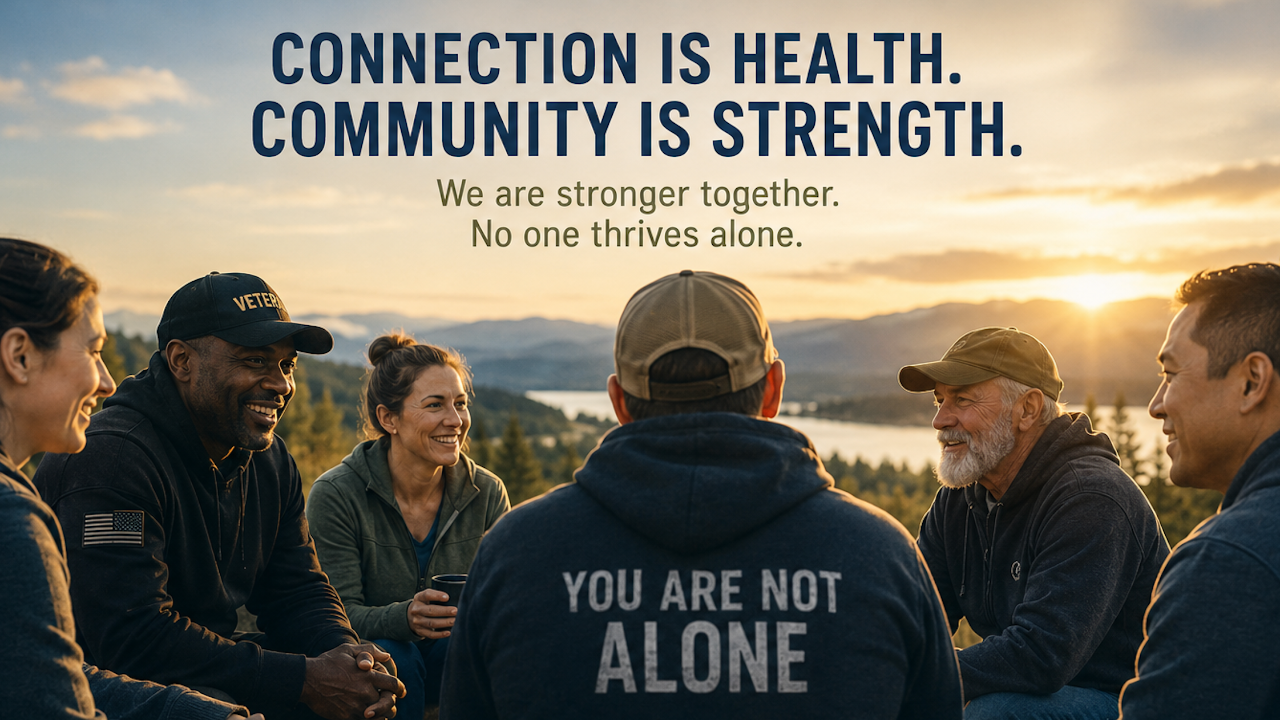
Over the past several years, conversations about health have increasingly expanded beyond exercise, nutrition, and disease prevention to include something that, for a long time, many people overlooked or underestimated: the role of human connection in determining how well we live, how well we cope, and ultimately how well we heal.
When the U.S. Surgeon General released the advisory Our Epidemic of Loneliness and Isolation, it elevated a conversation that many people working in coaching, behavioral health, military and Veteran services, and community leadership had already been witnessing firsthand. Across the country, people are experiencing profound levels of disconnection, even while living in environments that appear highly connected from the outside. Social media, remote work, fractured communities, demanding schedules, chronic stress, and years of increasing polarization have left many individuals feeling isolated in ways that are not always visible, but are deeply consequential to both physical and emotional health.
The advisory drew national attention because the implications reach far beyond emotional well-being. Chronic loneliness and social isolation are now associated with increased risks of cardiovascular disease, depression, anxiety, cognitive decline, and premature mortality, with some research comparing the health impact of prolonged isolation to smoking up to fifteen cigarettes per day. What is perhaps most striking, however, is that loneliness is not simply about being physically alone. Many people are surrounded by coworkers, neighbors, or even family members and still lack the kind of meaningful connection that allows them to feel understood, supported, valued, and grounded within a larger community. This matters because human beings are not designed to navigate adversity in isolation.
Whether someone is managing chronic stress, recovering from trauma, adapting to major life transitions, caring for others, working in high-pressure environments, or simply trying to maintain their well-being in an increasingly fast-moving world, the presence or absence of community often shapes how successfully they are able to adapt and recover. Long before the healthcare field began discussing social determinants of health, communities themselves understood this intuitively. People gathered around tables, relied on neighbors, shared responsibilities, raised families collectively, mourned losses together, and created structures of belonging that helped individuals carry difficult seasons of life without carrying them alone. Unfortunately, much of modern life has disrupted those structures.
In many communities, people no longer know their neighbors. Families are geographically dispersed, and work schedules are demanding and often isolating. Even high performers, individuals who appear resilient and highly capable from the outside, may be operating with very little meaningful support beneath the surface. This is particularly true among populations that are frequently expected to remain composed under pressure, including Veterans, first responders, healthcare professionals, executives, caregivers, and others whose environments often reward performance while quietly discouraging vulnerability or connection.
This is one of the reasons coaching has become increasingly important, not simply as a tool for goal attainment or accountability, but as a profession uniquely positioned to help people reconnect to themselves, to others, and to the communities that support long-term well-being.
Health and wellness coaches frequently work with individuals who know what they “should” be doing to improve their health yet struggle to sustain meaningful change because behavior change rarely occurs in isolation. Sustainable health habits are often strengthened through relationships, encouragement, accountability, and environments where people feel safe enough to grow. Trauma-informed coaches understand this in particularly important ways because they recognize that many individuals who have experienced trauma, chronic stress, or adversity have also experienced disconnection, withdrawal, or the loss of trust and belonging that healthy communities provide. The work is not simply about helping people function more effectively. It is about helping people rebuild safety, resilience, confidence, and connection in ways that support long-term growth.
The same is increasingly true within performance-based coaching environments, including Mentor Agility’s AdrenalEdge™ model, where coaches support individuals operating in high-stakes, high-pressure conditions that require consistent emotional regulation, clear decision-making, adaptability, and recovery. In these environments, resilience cannot be reduced to toughness alone. Human performance is deeply influenced by whether people have trusted relationships, meaningful support systems, and communities that help them recover from sustained stress rather than merely endure it. Coaching helps create conditions where people no longer feel they must carry everything on their own.
That reality sits at the heart of Veterans Talking to Veterans (VTTV), where the emphasis has never been solely on programming, training, or even coaching itself, but on creating environments where Veterans and their family members can reconnect through shared experience, conversation, support, and community. Consistently Veterans come together not because someone is attempting to “fix” them, but because relationships and stories matter, and the simple act of being understood by others who have walked similar paths can profoundly change how people experience both challenge and healing.
Over time, people begin showing up for one another and conversations continue outside formal meetings. Relationships form and individuals rediscover purpose, confidence, and belonging in ways that cannot always be measured easily but can absolutely be felt.
That same spirit is central to the Veterans Talking to Veterans: Stronger Together Summit 2026 taking place this summer at the National Museum of Military Vehicles in Dubois, Wyoming. While the Summit includes speakers, resources, training opportunities, and conversations surrounding post-traumatic growth and well-being, the larger purpose is ultimately about bringing people together in a way that feels increasingly rare in modern life. It is designed to create space for connection between Veterans, family members, coaches, organizations, community leaders, and individuals who understand that healing and resilience are strengthened in community, not isolation.
As the coaching profession continues to evolve, there is growing recognition that information alone is rarely enough to create lasting change. Most people already understand the basics of healthy living, especially due to the ability to access information so easily. What many are searching for instead is connection, belonging, purpose, and the opportunity to be part of something larger than themselves.
In a culture where loneliness and isolation increasingly shape both physical and emotional health, the work of coaches is more important than ever because coaches help people reconnect with the relationships, communities, and support systems that make long-term health, resilience, and human flourishing possible.